

Kosli in a nutshell
Think of Kosli as a flight recorder for your software delivery lifecycle (SDLC). Like a flight recorder, Kosli does not control the plane. It records what happened so that after the fact you can reconstruct the sequence of events. The reason this matters in software is that incidents and audit questions are inevitable, but the ability to answer “what was running, how did it get there, and did it pass all required checks?” should not depend on someone’s memory or a manual audit trail. You report events of interest (builds, test results, deployments, environment state) through the CLI or API. Kosli stores each record as an immutable entry and evaluates it against the controls defined in your policies. Change sources include build systems (CI pipelines), runtime environments (Kubernetes clusters, AWS ECS, Lambda), and business processes (onboarding, access management).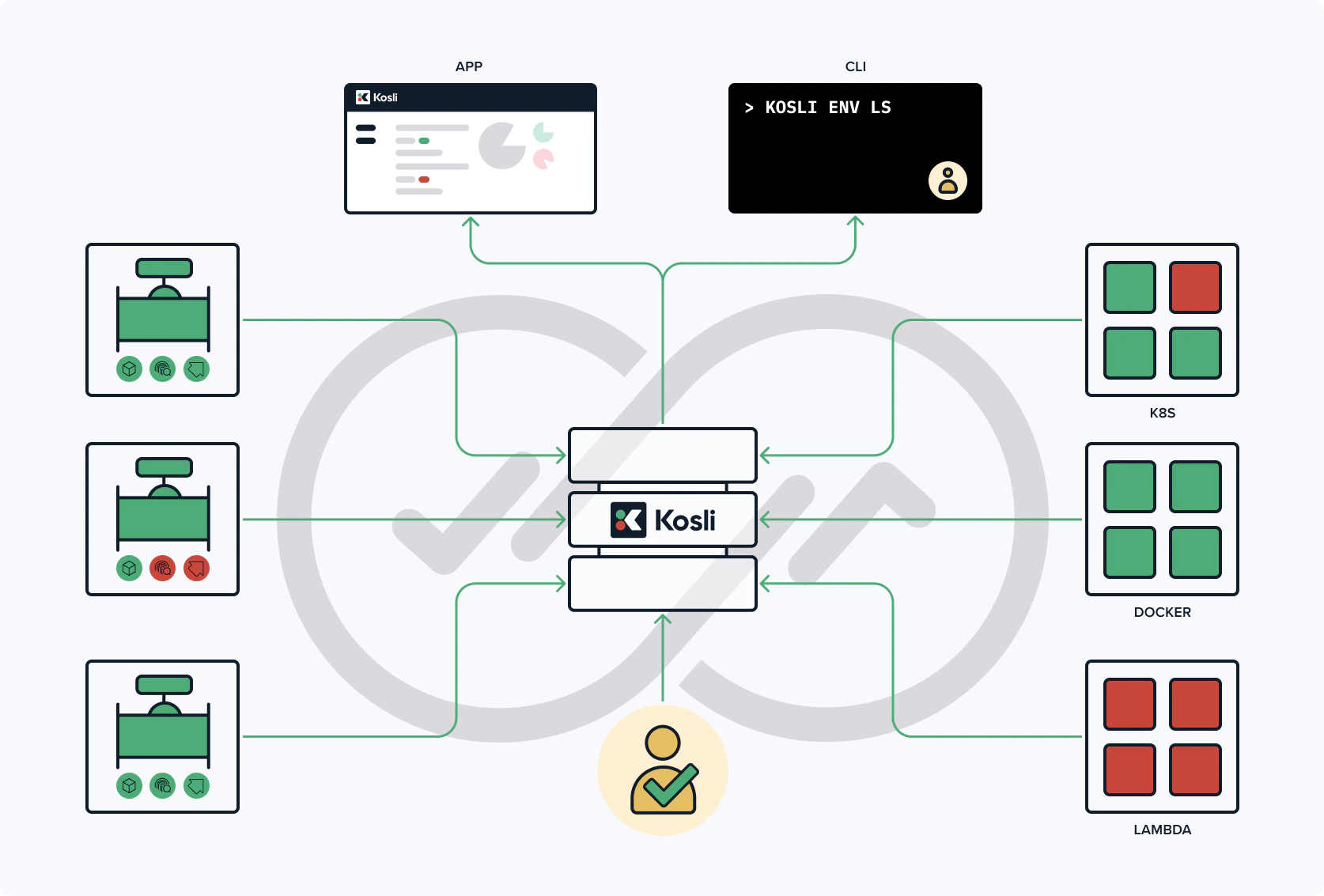
When to use Kosli
- Compliance automation: Traditional compliance evidence collection is manual, error-prone, and always playing catch-up with the pace of delivery. Kosli automates evidence collection for frameworks like SOC 2, ISO 27001, or NIST SP 800-53, verifying that artifacts in production have passed required controls (security scans, code review, approval workflows) so you stay audit-ready at all times.
- Change observability: In distributed systems, understanding what changed, when, and by whom often requires piecing together logs from half a dozen tools. Kosli provides a unified view of change across your entire delivery pipeline, even without specific compliance requirements.
Where to go next
New to Kosli?
New to Kosli?
Read Risks, Controls, and How Kosli works in order. Use the Glossary as a reference along the way. When you are ready to try it hands-on, work through the Learning Labs.
Setting up Kosli for your team?
Setting up Kosli for your team?
Head to Getting Started for step-by-step setup, or see the Implementation Guide for organizational rollout planning.
Looking up a specific term?
Looking up a specific term?
See the Glossary for quick-reference definitions of every Kosli term.